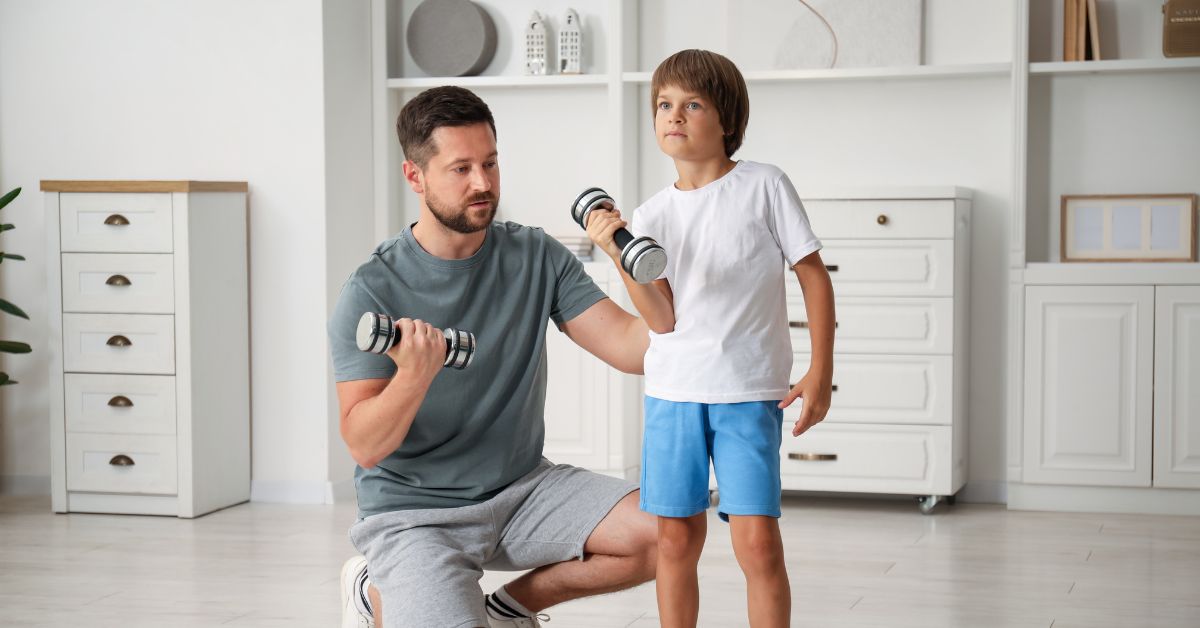
If you're a dad, your calendar probably doesn't belong to you. Between school drop-offs, work…
Finding the Common Language: What I Learned About Decoding Exercise Guidelines
I work in clinical exercise physiology, and if there’s one thing I hear from patients over and over, it’s some version of: “I have no idea what I’m supposed to be doing. Can you just tell me?” They’re overwhelmed by exercise guidelines that sound like they were written in a foreign language, and honestly, I don’t blame them.
That’s exactly why I wanted to bring Rick Howard onto the podcast. Rick is an associate professor of applied sport science at West Chester University, and I met him at the Medical Fitness Association Summit, where he gave a talk aimed at fitness professionals about “finding the common language” around exercise. Sitting in that room, I remember thinking: this isn’t just for professionals. This is exactly what my patients need to hear.
So I asked him to break it down for all of us, and our conversation reshaped how I think about exercise strategies for the busy professionals I work with every day.
Where the Numbers Actually Come From
I’ve spent years telling clients they need 150 minutes of moderate activity a week, so I wanted to start there. Rick explained something I found genuinely clarifying: that number was really built around aerobic exercise specifically, because it was measurable — you could put someone on a treadmill and know exactly how hard they were working. Other forms of movement, like strength training, never got the same tidy time stamp, even though we now know the health returns can be just as significant, especially for someone just starting out.
That reframed something for me. The guidelines aren’t a complete picture of health. They’re really just the piece we happened to know how to measure first. As Rick put it during our conversation:
We didn’t look at it holistically from the mental part, the social, the emotional, or any of that stuff. We just looked at the physical part.
Why I Think the Guidelines Can Backfire
This is the part of our conversation that stuck with me the most. Rick pointed out that when we treat exercise guidelines like a pass/fail test, we can actually push people away from the very activity that would help them. If one of my patients believes gardening twice a week or walking the dog around the block “doesn’t count” because it’s not hitting some official number, they stop valuing movement they actually enjoy — and that’s a real loss.
Rick said something during our talk that I haven’t stopped thinking about:
If I think that I have to be meeting these targets that somebody has set out there for the amount of exercise I need to get to define my physical activity, then I don’t enjoy it as much, and I think that’s a really huge issue that we have, is we don’t set it up for people to enjoy it.
I’ve started saying this to my own patients now: build your routine around what you genuinely like doing first, then layer in structure. Not the other way around.
Strength Training: The Piece I Don’t Think Gets Enough Credit
I told Rick this myself during our conversation, and I’ll say it again here: strength training is one of the biggest returns on investment we have for long-term health, and I don’t think it gets nearly enough attention in mainstream exercise guidelines. Building and maintaining muscle mass is tied closely to metabolic health, and for patients just starting out, it tends to produce visible, motivating results fast — which matters more than people realize when someone is trying to stick with something new.
Rick introduced a concept I loved: “strength span,” a companion to health span. It’s not just about living longer — it’s about staying strong enough to actually do the things you love for as long as possible. Carrying groceries in one trip. Picking up your grandkids. Getting through a weekend in the garden without your back complaining about it.
One of my biggest pet peeves as a clinician is how often men in particular skip leg day. I pushed back on this with Rick, and he agreed completely — the legs and glutes house the body’s largest muscle groups, and neglecting them means missing out on real benefits for hormonal health as we age. He also made a point I’m going to start repeating to every patient who dreads doing crunches: if you actually want a strong core, do weighted squats. Lying on the floor doing crunches just isn’t as effective.
Exercise Strategies I’m Taking Back to My Practice
A few things from this conversation are going straight into how I counsel my busy professional patients:
- Start with what you’ll actually do. Not the “top five exercises everyone should do” — the handful you genuinely don’t mind doing. Consistency beats intensity every time.
- Break workouts into smaller windows. Even a 15-minute session a few times a week during a brutal stretch of work is far better than stopping altogether.
- Attach movement to your existing day. A walk at lunch, a few squats during commercial breaks, a short walk with your kids after dinner. Small and repeatable wins over occasional and ambitious.
- Avoid the all-or-nothing trap. If you can’t hit the full 150 minutes this week, doing something is still meaningfully better than doing nothing. I see this mindset trip up so many of my patients.
- Bring in accountability. A workout partner, a family member, a scheduled class — having someone counting on you helps a habit actually stick.
Moving in More Than One Direction
Something else I want my patients thinking about: most everyday routines — walking, gym machines, even a lot of home workouts — happen almost entirely in one plane of motion, front to back. But real life doesn’t move that way. Golf swings, reaching for something on a high shelf, twisting to grab a bag out of the back seat — that’s rotational, multiplanar movement. I’ve seen this firsthand with patients who picked up pickleball and immediately hurt their backs, simply because they’d never trained the rotational strength the sport demands. Building that kind of movement into a routine is one of the best ways to prevent exactly that kind of injury.
What I’m Taking Away From This
If there’s one thing I want my patients — and honestly, myself — to internalize, it’s that exercise guidelines were never meant to be a rigid pass/fail system. They’re a starting reference point, not a verdict on anyone’s worth or effort. The most sustainable exercise strategies are built from the ground up: starting with movement you enjoy, adding strength training deliberately, and adjusting as your life, schedule, and goals shift across different decades.
For the busy professionals I work with, I don’t think the goal is ever perfection. It’s finding a version of movement that fits into a real, complicated life — and sticking with it long enough for the benefits to actually compound.
I keep coming back to something Rick said near the end of our conversation, because I think it’s the truest thing either of us said all episode:
It’s not because we’re getting older that we can’t do it, it’s because we’re not doing it that we can’t do it.
This post was originally a 9 to 5 wellness podcast.
Related Posts