
Recently, one of my clients, Layla, asked me something I hear all the time from…
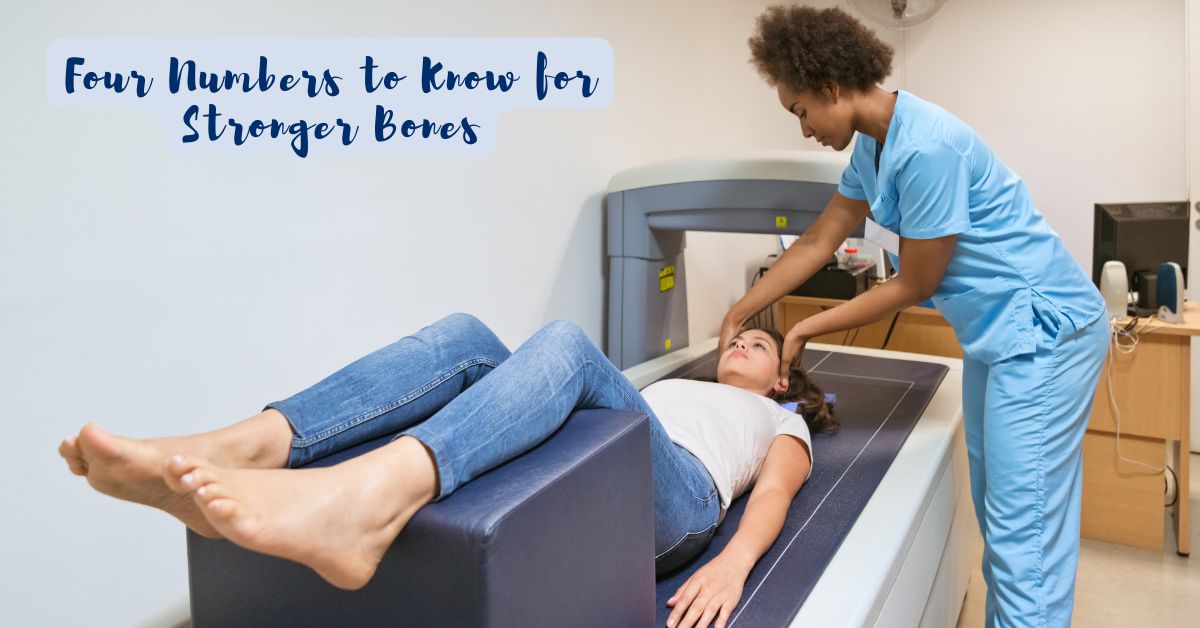
Four Numbers to Know for Stronger Bones
Your bones are built to last. Most people don’t know they’re at a higher risk till they fracture their hip. Once the fracture occurs it becomes hard to heal. It leads to hospitalization and sometimes infection. Maybe this happened to you. Maybe it happened to your loved one. But it could’ve been prevented. Bone health is often invisible until a fracture occurs. In this blog you’ll learn the four numbers to know for stronger bones. These critical numbers can help prevent age related bone loss fractures.
Four Numbers for Protecting Bone Health
Osteoporosis and low bone mass affect millions of adults, yet many do not know their risk. Doctors use specific metrics to evaluate bone strength and predict fracture risks. Understanding these four essential numbers allows you to take proactive control of your skeletal health.
Numbers on DEXA Scan Can Help Prevent Fractures
Bone Mineral Density (BMD)
Bone Mineral Density measures the amount of calcium and other minerals packed into a specific segment of bone. This measurement is typically taken at the hip, spine, and sometimes the forearm using a Dual-energy X-ray Absorptiometry (DEXA) scan.
The DEXA scan reports BMD in grams per square centimeter^2. While the raw number itself is difficult for patients to interpret on its own, it serves as the baseline data used to calculate your T-score and Z-score. A higher BMD indicates stronger, denser bones that are more resistant to fractures.
The T-Score
The T-score is the most critical number for diagnosing bone loss in postmenopausal women and men aged 50 and older. It compares your individual BMD to the peak bone density of a healthy, young 30-year-old adult of the same sex.
The World Health Organization defines T-score categories as follows:
- Normal: -1.0 or higher
- Osteopenia (Low bone mass): Between -1.0 and -2.5
- Osteoporosis: -2.5 or lower
Because the scale is negative, a lower number means greater bone loss. For every drop of 1 standard deviation below normal (e.g., from -1.0 to -2.0), your risk of a fracture approximately doubles.
The Z-Score
Unlike the T-score, the Z-score compares your bone density to what is standard or expected for someone of your same age, sex, and body size.
Doctors primarily use Z-scores for children, teenagers, premenopausal women, and younger men. A Z-score of -2.0 or lower indicates that your bone density is significantly lower than average for your peer group. A low Z-score often prompts physicians to investigate secondary causes of bone loss, such as underlying medical conditions, nutritional deficiencies, or specific medication side effects.
The FRAX Score
The Fracture Risk Assessment Tool (FRAX) score is an algorithm developed by the World Health Organization. It calculates your 10-year probability of experiencing a bone fracture.
Instead of looking only at bone density, FRAX combines your hip BMD with clinical risk factors. These factors include your age, weight, smoking history, alcohol intake, family history of hip fractures, and use of rheumatoid arthritis medications or oral steroids.
The FRAX tool generates two critical percentages:
- Your 10-year probability of a major osteoporotic fracture (hip, spine, forearm, or shoulder).
- Your 10-year probability of a hip fracture specifically.
Medical guidelines generally recommend starting osteoporosis treatment if your FRAX score shows a 10-year risk of > = 20% for a major osteoporotic fracture or >= 3% for a hip fracture.
Why Knowing These Numbers Matters
Knowledge of these metrics shifts your healthcare approach from reactive to preventative. Bone loss is a silent process that does not cause pain or symptoms until a bone breaks.
By tracking these four numbers, you and your doctor can:
- Identify risks early: You can implement lifestyle interventions like weight-bearing exercise, calcium intake, and Vitamin D optimization before irreversible damage occurs.
- Customize treatment plans: Medication decisions are rarely based on a single factor; doctors weigh your T-score alongside your FRAX percentages to determine if prescription intervention is necessary.
- Monitor progress: Repeat DEXA scans allow you to see if your bone density is stabilizing, improving, or worsening in response to therapy.
Knowing these numbers can protect your bone health and prevent a fracture. Talk to your health care provider about bone health and get a DEXA scan done sooner than later.
Research Studies Referenced:
Bone Health- https://pmc.ncbi.nlm.nih.gov/articles/PMC7485021/
Peak bone mass in young women- https://pubmed.ncbi.nlm.nih.gov/7639106/
Effects of Resistance Exercise on Bone Health- https://pmc.ncbi.nlm.nih.gov/articles/PMC6279907/
Correlation of Muscle Mass and Bone Mineral Density – https://pmc.ncbi.nlm.nih.gov/articles/PMC9524880/
Books on the Topic:
Great Bones: Taking Control of Your Osteoporosis
This post was originally a 9 to 5 wellness podcast.
Related Posts